In this guide
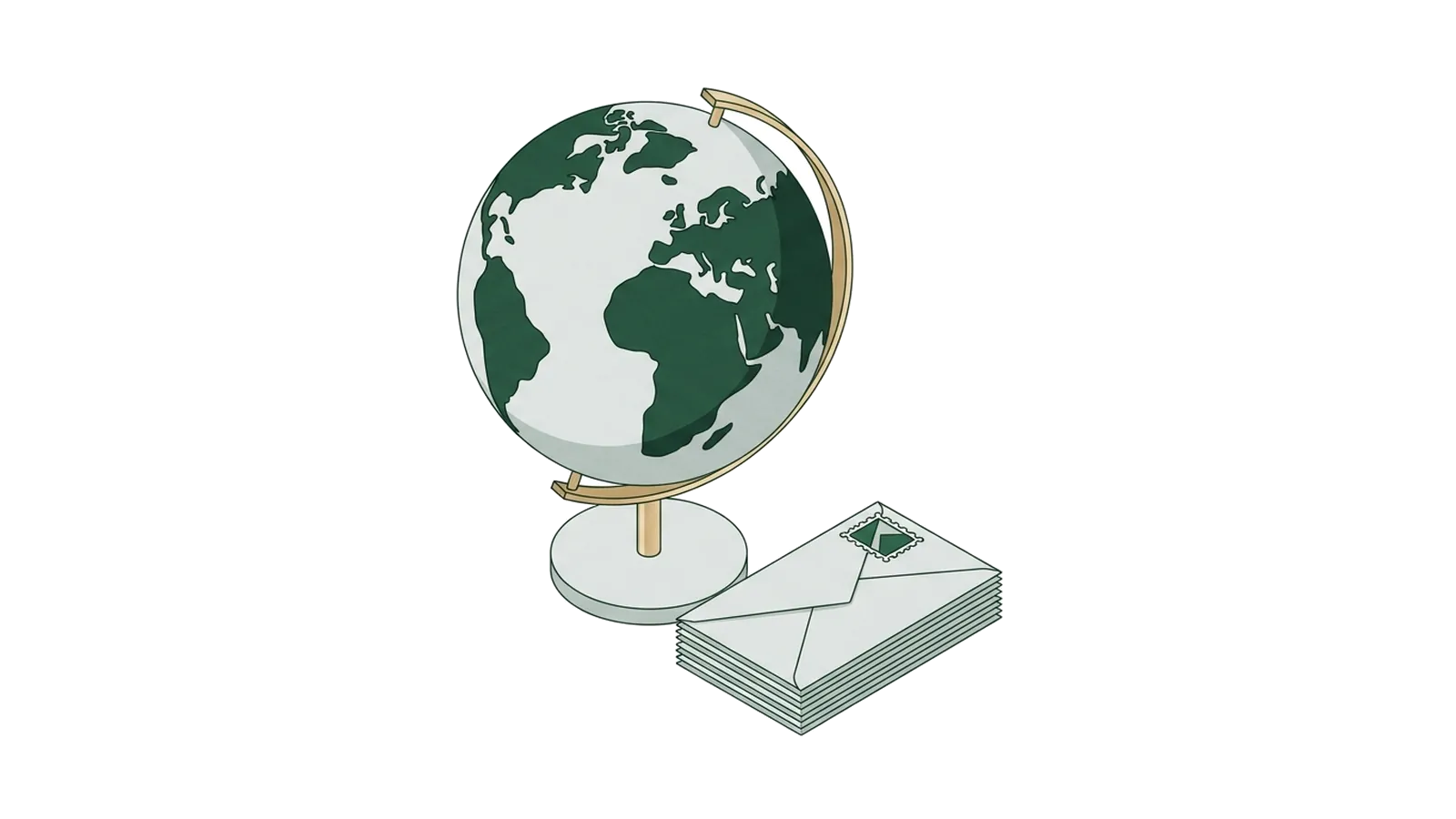
When you sell a physical product, tax usually feels local. Software is different. A customer in Germany, one in Texas and one in Australia can all subscribe on the same afternoon, and each of their governments may expect tax on the sale. Small products rarely think about this until the first international customer arrives. By then it's tempting to ignore, which is the expensive option later.
The answer, briefly
- Software sold online is often treated as a digital service, and many places tax it where the customer is, not where you are.
- You can handle registration and filing yourself (cheaper per sale, more work), add a tax tool to calculate it, or use a merchant of record that does all of it for 5% + 50¢ per sale.
- For one or two people selling to many countries, a merchant of record is often the simplest place to start.
Why software is different
Three features of selling software online change how tax works:
- No border. Customers anywhere can buy, without you choosing which countries to sell to.
- Customer location decides. For digital services sold to consumers, many tax systems use the buyer's location, not the seller's.
- Small amounts, many places. You might have three customers in each of twenty countries, each with its own rules.
Selling to customers in the US
The US has no single national sales tax. Each state sets its own rules, and states differ on whether software subscriptions are taxable at all. Since the 2018 Supreme Court decision in South Dakota v. Wayfair, states can require sellers with no physical presence to collect sales tax once they pass an economic threshold in that state, commonly around $100,000 in yearly sales there.
For a small product, that usually means two things:
- You may not owe anything in most states for a long time.
- You need to track sales by state from the start, so you know when you cross a line.
Selling to consumers in the EU and UK
The EU and the UK charge VAT on digital services sold to consumers based on where the customer lives, at that country's rate. Sellers based outside the EU are generally expected to account for VAT from their first sale to an EU consumer, typically through a single registration scheme that covers all EU countries. The UK has a similar rule for sellers based outside the UK.
Sales to businesses with a valid VAT number usually work differently: the business accounts for the VAT itself (often called the reverse charge), and you note it on the invoice. That's one reason many B2B products ask for a VAT number at checkout.
Everywhere else
A growing number of countries tax foreign digital services in a similar way, including Australia, Canada, Japan, India and others, each with its own thresholds and registration processes. You don't need to know all of them on day one. You need a setup that either tracks this for you or handles it for you.
Your three options
| Option | Cost | Your work | Good for |
|---|---|---|---|
| Direct card processor, handle tax yourself | ~2.9% + 30¢ per US card charge[1], plus an accountant's time | Register, collect, file and pay in each place you're required to | Mostly domestic customers, or you already have an accountant |
| Direct processor + tax tool | Processor fees plus 0.5% per transaction on Stripe Tax's basic plan (no-code)[1] | The tool calculates and collects; you still register and file | Growing products that want control and lower fees |
| Merchant of record | 5% + 50¢ per sale on Paddle[2] and Lemon Squeezy[3] | Almost none: they're the legal seller and file and pay tax | Solo builders selling worldwide from day one |
What a merchant of record actually does
A merchant of record (MoR) is the company that legally sells your product to the customer. You sell to them; they sell to the customer. That changes several things at once:
- Tax: Paddle says it collects the applicable tax, tracks filing deadlines, prepares records, and submits sales tax returns and payments[2]. Lemon Squeezy describes taking on tax calculation, collection, filing and payment as part of its standard pricing[3].
- Disputes and fraud: Paddle includes fraud protection, chargebacks and buyer support in its pricing[2].
- The receipt: customers see the MoR's name alongside yours. Most don't mind; some business buyers ask questions.
- Payouts: you receive money from the MoR, minus fees, on its schedule.
What the difference costs
On a $20 subscription, a direct processor with subscription billing costs about $1.02 per payment; a merchant of record costs $1.50. The difference is about 48 cents per customer per month.
Compare that with doing tax yourself: registrations, periodic filings in several places, an accountant's fees, and your own hours. Early on, with few customers, 48 cents each often costs less than the hours and fees of doing it yourself. As revenue grows, the difference grows too, and a direct processor plus a tax tool becomes worth pricing out properly.
How to decide
- Where will your first 100 customers be? Mostly one country: a direct processor is simpler than it sounds. Many countries: lean towards a merchant of record.
- Who are they? Selling only to businesses changes the picture in many places; ask your accountant how.
- How much of your time is tax worth? If the honest answer is "none", pay the merchant of record.
- Can you switch later? Yes, but moving subscriptions between payment providers takes planning, and some customers will need to re-enter card details. Choose the option you can live with for a year or two.
Records to keep from your first sale
Whichever option you choose
- The customer's country, and US state for US customers.
- Whether they're a business, and their VAT number if they gave one.
- The amount, currency and date of every payment and refund.
- A monthly summary of sales by country and state.
A merchant of record keeps most of this for you. With a direct processor, export it monthly; most processors offer reports by country.
Tax slips from the first sale
- Assuming "I'm small, so it doesn't apply". Some rules apply from the first sale, regardless of size.
- Not collecting customer location at checkout, then trying to reconstruct it a year later.
- Treating tax as part of your revenue. Tax you collect isn't yours; keep it separate.
- Choosing on fees alone without counting the hours of doing tax yourself.
Questions
Do I need to register in every country on day one?
Usually not. But some places require registration from the first consumer sale, so check before you sell into them, or use a merchant of record that handles it.
Should my prices include tax?
For consumers in the EU and UK, prices are usually shown including VAT. For US customers and businesses, prices are usually shown before tax. A merchant of record or tax tool can handle display for you.
Can I switch from a merchant of record later?
Yes. Plan it: you'll need your own tax registrations ready, and existing subscriptions may need customers to re-enter payment details.
This week: decide which option you're starting with and write down why. Make sure checkout collects country (and VAT number for businesses). Then book one call with an accountant who works with online businesses before your first international sale. For the fee side, see What card fees really cost.
Sources
Checked 14 November 2026. Numbers in brackets in the text point to these sources.